Sponsored by the Southeast Coalition of Authentic Reenactors,
a Federal 501c3 nonprofit historical education group, founded in 2000

History of the Southeastern Lowcountry
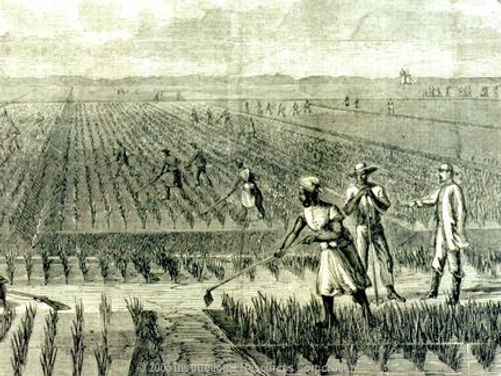
For generations, the wealth of the Lowcountry was intricately tied to rice. From the 1720s to the early 1860s, no other commodity held such paramount importance in the region. Despite the presence of indigo, cotton, forest products, and manufacturing, none could rival the prosperity derived by planters
from their rice estates.
The impact of rice plantations reverberated through Lowcountry geography and economy, transforming Charleston into one of the world's wealthiest cities. However, this wealth was predominantly constructed on the backs of enslaved labor. With rudimentary tools, slaves undertook the colossal task of clearing vast wooded swamps and constructing extensive hydrological systems—dams, dikes, and floodgates (referred to as “trunks”)—essential for irrigating rice fields where they cultivated and tended to the grain.
From the crucible of slavery emerged the unique creole culture of the Lowcountry black population and their descendants, recognized as the Gullah Geechee people. This culture, a fusion of African and European influences, gave rise to the only English-based creole language in North America and a distinctive cuisine centered around rice.
19th Century History of Bluffton
The Land of Live Oaks and Spanish Moss… but all was not necessarily well.
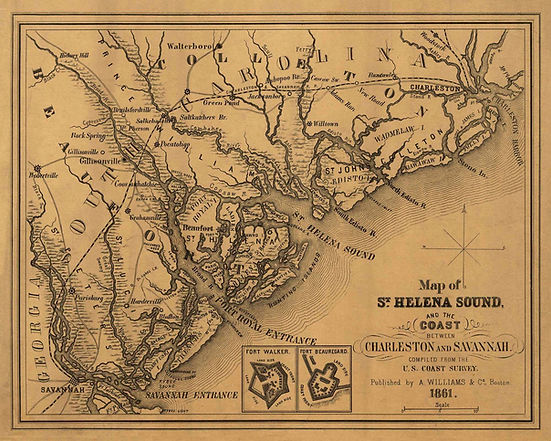
In 1825, Bluffton, South Carolina unfurled its roots as a haven for seasonal respite, cradling the visions of rice and cotton planters seeking solace from the scorching heat, relentless mosquitoes, and the specter of yellow fever and malaria haunting Lowcountry plantations. Amidst the gentle bluffs of the May River, a refuge blossomed, a sanctuary where families sought respite from the throes of nature's challenges. In those early days, the currents of travel flowed along waterways, and Bluffton, strategically poised between Savannah, Georgia, and Charleston, emerged as a bustling nexus.
Soon, the town wove itself into the tapestry of commerce, a hub where crops embarked on journeys to distant ports and where the bounty of the world found a home in flourishing general stores. The pulse of business summoned year-round residents, culminating in the town's incorporation in 1852.
Yet, as the 1840s dawned, a disquiet stirred among locals, fueled by the imposition of Federal tariffs on imported treasures. These duties, draped upon essential and luxurious imports alike, cast a shadow of economic burden. From the murmurs of discontent arose the "Bluffton Movement," a passionate protest against the encroaching tariffs. Under the sheltering branches of an ancient oak, now christened "Secession Oak," enraged residents voiced their dissent, birthing a fervor that echoed with calls for secession
from the Union.
“The Bluffton Movement”
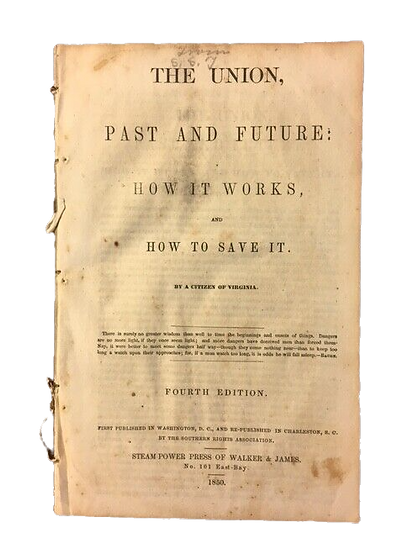
Secession Pamphlet, Early 1850s
The inception of the Bluffton Movement traces back to a political rally beneath the iconic "Secession Oak" in Bluffton, South Carolina, on July 31, 1844. This initiative aimed to prompt "separate state action" against the Tariff of 1842, fueled by John Calhoun's unsuccessful bid for the presidential nomination and the Northern Democrats' abandonment of Southern interests on the tariff issue. While some "Blufftonites" pondered disunion, leader Robert Barnwell Rhett sought a Union reform to better safeguard Southern concerns.
The movement dissipated swiftly, primarily due to its disapproval by Calhoun.
Despite its brief existence, the Bluffton Movement left an indelible mark on history, emerging from the fervent atmosphere of that political rally beneath the "Secession Oak." As John Calhoun's bid for the presidency faltered and Northern Democrats turned their backs on Southern tariff concerns, the movement sought to address these issues through "separate state action."
While contemplating disunion was on the minds of many "Blufftonites," the primary objective of their leader, Robert Barnwell Rhett, leaned more towards reform within the Union. His vision aimed at fortifying Southern interests with additional safeguards. However, the movement's fate took a turn as Calhoun, a prominent figure, distanced himself, contributing significantly to its eventual collapse. In the annals of history, the Bluffton Movement serves as a testament to the complex dynamics and shifting alliances of 19th-century American politics.
Bluffton and The War Between the States
The burning of Bluffton, South Carolina, on June 4, 1863, was a significant and tragic event during the Civil War, reflecting the Union’s strategy to disrupt the Confederate war effort by targeting key Southern towns.
By 1863, Union forces had firmly established control over the nearby coastal regions, including Hilton Head and Beaufort, as part of the Port Royal expedition in late 1861. Bluffton, located strategically along the May River, was seen as a Confederate stronghold and a key site for smuggling goods and supplies inland.
Union forces sought to weaken Confederate resources and morale by destroying infrastructure and eliminating potential threats along South Carolina's waterways.
Union Raid of Bluffton
On June 4, 1863, Union forces launched a raid on Bluffton. Troops were transported upriver by gunboats, with the primary goal of destroying what they considered a supply hub and disrupting Confederate activities in the area.
The town, which had served as a summer retreat for wealthy planters escaping the heat and malaria of inland plantations, was largely unprotected at the time of the raid.
Union troops set fire to much of Bluffton, destroying homes, businesses, churches, and other structures. Of the town’s approximately 60 buildings, only 12 survived the fire, including the Heyward House. These remaining structures are thought to have been spared either by chance or due to their proximity to Union positions during the raid. Confederate forces in the region were unable to prevent the attack, leaving the town vulnerable to extensive destruction.
Aftermath
The burning of Bluffton left many residents displaced and devastated, marking a significant blow to the community. However, it also became a symbol of Southern resilience and defiance in the face of war.
Bluffton remained scarred by the raid for years, but its surviving structures, like the Heyward House, serve as poignant reminders of the town's endurance through one of its darkest chapters.

Robert Barnwell Rhett